Ranking on google doesn't mean AI recommends you
A business can sit on page one of Google and still be missing from the answer a customer gets from ChatGPT, Gemini or Google's AI Overviews. That gap is now measurable, and it is widening.
For two decades, the playbook was simple: rank higher, get found. AI search changes the question. Instead of returning ten links, it reads, compares and picks a few businesses to name. Ranking is still useful. It is no longer the whole story.
the page-one shortcut is closing
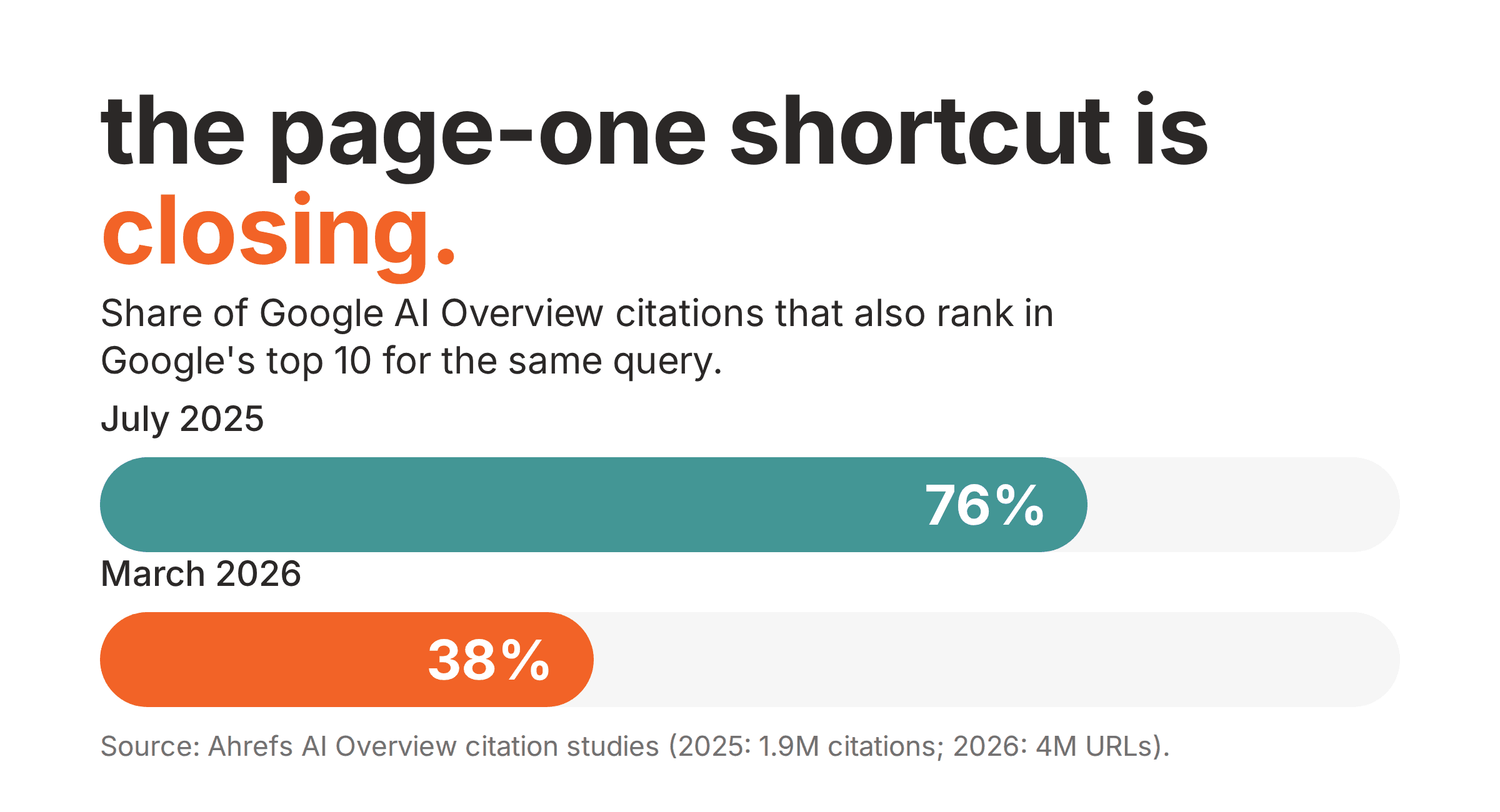
In July 2025, Ahrefs analyzed 1.9 million citations from Google AI Overviews and found that about 76% of the cited pages also ranked in Google's top 10 for the same query [1]. Back then, ranking well was a reliable shortcut into AI answers.
By March 2026, a larger Ahrefs study of 863,000 keywords and 4 million AI Overview URLs found that only 38% of cited pages ranked in the top 10 [2]. Most of the rest came from positions 11 to 100 or from pages that did not rank in the top 100 at all [2][3].
The numbers vary by study. BrightEdge reported an overlap of roughly 17% in February 2026, using a different method and dataset [3]. The exact figure depends on how it is measured, but the direction is consistent: top-10 rankings predict AI citations far less than they did a year ago.
The gap is wider outside Google's own AI features. Ahrefs compared citations from ChatGPT, Gemini, Copilot and Perplexity with Google's results and found that, on average, only about 12% of cited URLs also ranked in Google's top 10 [4].
why ranking and recommending are different jobs
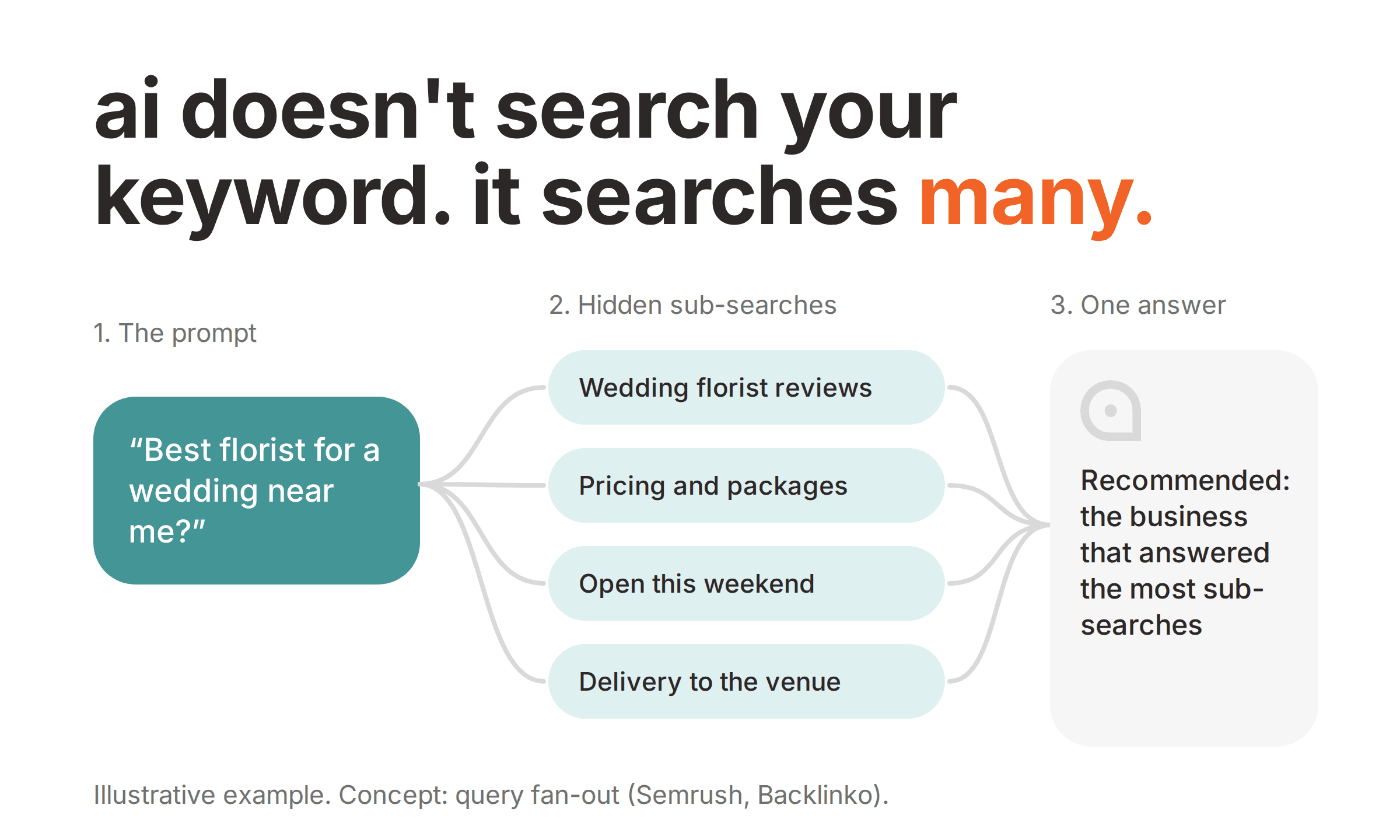
Search engines rank pages for the keyword typed in. AI systems do something different. They break one question into several smaller searches, a process known as query fan-out, then pull evidence for each before writing a single answer [5][6].
Take a customer asking, "best florist for a wedding near me?" The AI may quietly look up reviews, pricing, availability and delivery area. The business it recommends is the one with clear, trustworthy information across those sub-questions, not
Two details from the research explain why page-one pages get skipped:
AI retrieves passages, not whole pages. It selects the passage that best answers each sub-question, wherever that page ranks [6].
Pages that cover the related sub-questions get cited more. Semrush notes that pages addressing several of the intents behind a prompt are more likely to be cited, even without a #1 ranking for any keyword [5].
Surfer SEO's analysis of 173,902 URLs, as reported by Sitefire, found that 68% of pages cited in AI Overviews were outside the top 10, because they ranked for the fan-out searches rather than the head term [7]. Treat this as supporting evidence, since it comes from a different dataset.
what ai seems to trust: what the web says about you
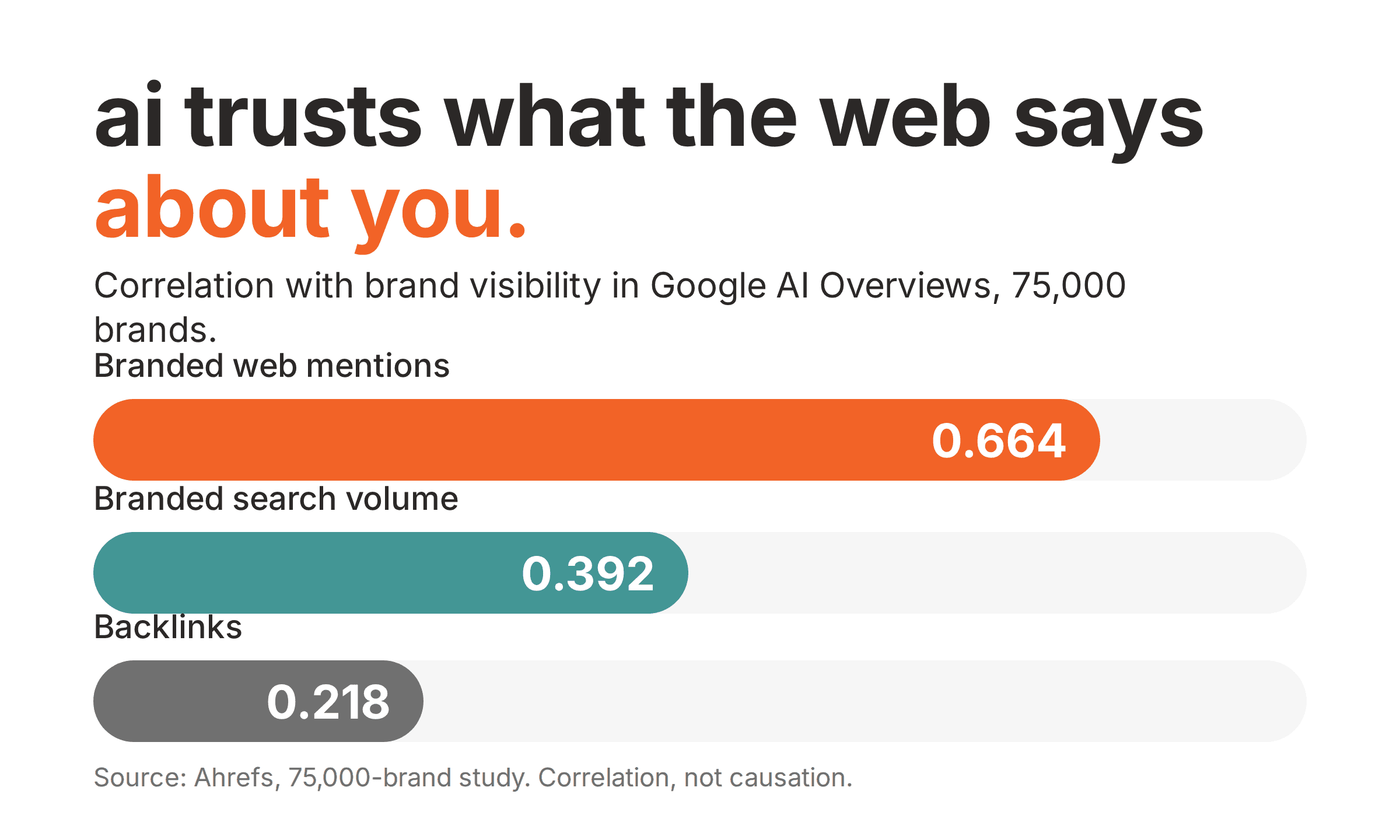
If rankings are not the signal, what is? In a study of 75,000 brands, Ahrefs found that branded web mentions had the strongest correlation with visibility in AI Overviews (0.664). Branded search volume came in at 0.392, and backlinks at just 0.218 [8]. Brands in the top quartile for web mentions averaged 169 AI Overview mentions, more than ten times the next quartile down [8].
what small businesses can do
Findabl's work in AI findability services starts from one idea: make a business easy for AI to understand, trust and recommend. In practice, that means:
Answer the real questions customers ask. Pricing, service areas, hours, reviews and "who is best for…" questions, each on a clear, specific, self-contained section of your site.
Build mentions beyond your own website. Reviews, directory listings, local press, partner pages and video all give AI more independent evidence.
Keep your business information consistent everywhere. Name, services, location and details should match across your site and profiles.
Measure AI visibility, not only rankings. Rank tracking cannot show whether ChatGPT or Gemini names you. Check what AI says about your business directly.
Our founder has spent a career in marketing and communications, and holds the view that AI search is the next big thing for how customers find local businesses. That conviction is behind Findabl's approach: AI-powered visibility, guided by real human strategy.
the takeaway
Google rankings are worth keeping. But the question customers now ask AI is "who should I choose?", and the answer depends on more than where a page sits in a list of links. Businesses that make themselves easy to find, understand and recommend will be the ones AI names.
Not sure whether AI recommends your business? Check your AI visibility at our homepage
about findabl
Findabl (findabl.ai) is an AI visibility and Answer Engine Optimization (AEO) agency that helps small businesses show up when customers ask ChatGPT, Gemini, Claude and other AI tools for recommendations. Its AI findability services are available globally, delivered remotely to businesses wherever their customers are searching.
Findabl's main office is in Toronto, Canada, with a second office in Fort Lauderdale, Florida, giving the team a presence in two of North America's busiest small-business markets.
Sources
Ahrefs, "76% of AI Overview Citations Pull From Top 10 Pages" (July 2025): https://ahrefs.com/blog/search-rankings-ai-citations
Search Engine Journal, "Google AI Overview Citations From Top-Ranking Pages Drop Sharply" (reporting the Ahrefs 2026 study): https://www.searchenginejournal.com/google-ai-overview-citations-from-top-ranking-pages-drop-sharply/568637/
ALM Corp, "Google AI Overview Citations From Top-10 Pages Dropped From 76% to 38%" (includes BrightEdge Feb 2026 figure): https://almcorp.com/blog/google-ai-overview-citations-drop-top-ranking-pages-2026/
Ahrefs, "Only 12% of AI Cited URLs Rank in Google's Top 10 for the Original Prompt": https://ahrefs.com/blog/ai-search-overlap/
Semrush, "What is query fan-out?": https://www.semrush.com/blog/query-fan-out/
Backlinko, "Query Fan-Out: What It Is and How It Affects AI Visibility": https://backlinko.com/query-fan-out
Sitefire, "Query Fan-Out: What AI Search Actually Does With Your Query" (citing a Surfer SEO analysis): https://sitefire.ai/blog/query-fan-out
Ahrefs, "An Analysis of AI Overview Brand Visibility Factors (75K Brands Studied)": https://ahrefs.com/blog/ai-overview-brand-correlation/
Ahrefs, "AI Brand Visibility Correlations" (follow-up study including ChatGPT and AI Mode): https://ahrefs.com/blog/ai-brand-visibility-correlations
more posts
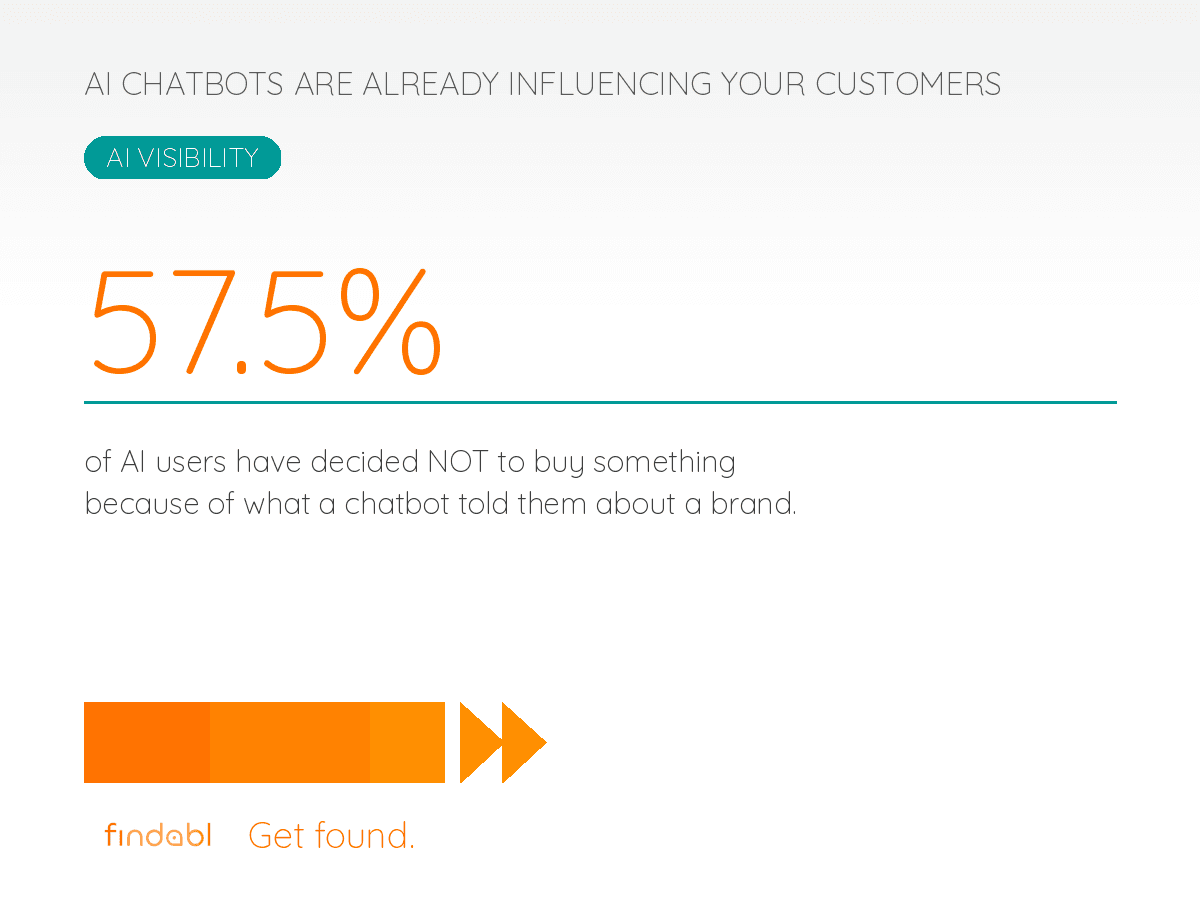
Your Next Customer Is Asking AI About You Before They Ever Call
The Business AI Recommends Isn't Always the Best One. It's the Best Documented One.
AI recommends the business it can verify, not the best one. Here's why documentation beats quality in AI search - and how to fix your trust signals.
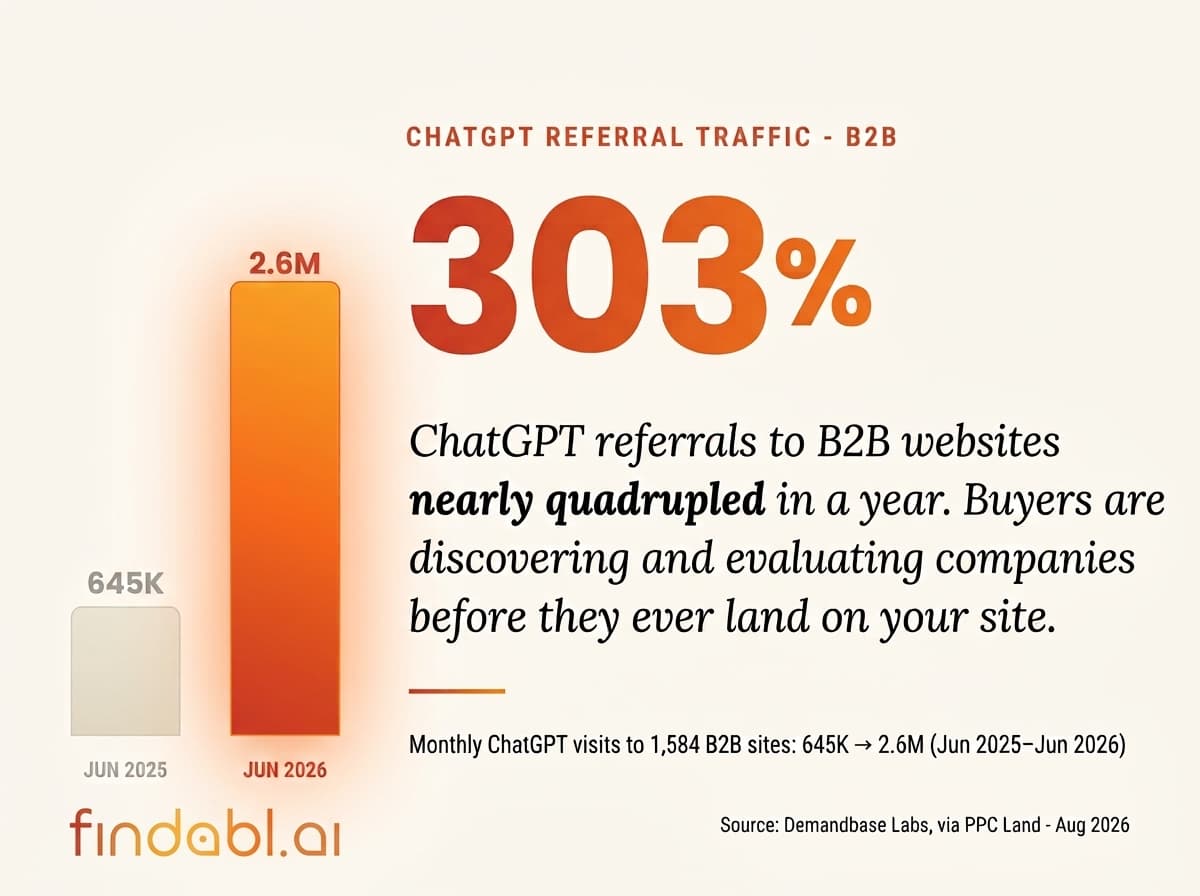
AI Referral Traffic to B2B Sites Is Up 303% — Is Your Brand Part of the Conversation?
AI Referral Traffic to B2B Sites Is Up 303% — Is Your Brand Part of the Conversation?